Buy It or Borrow It? A Photographer's Real-World Guide to Gear Costs That Actually Add Up
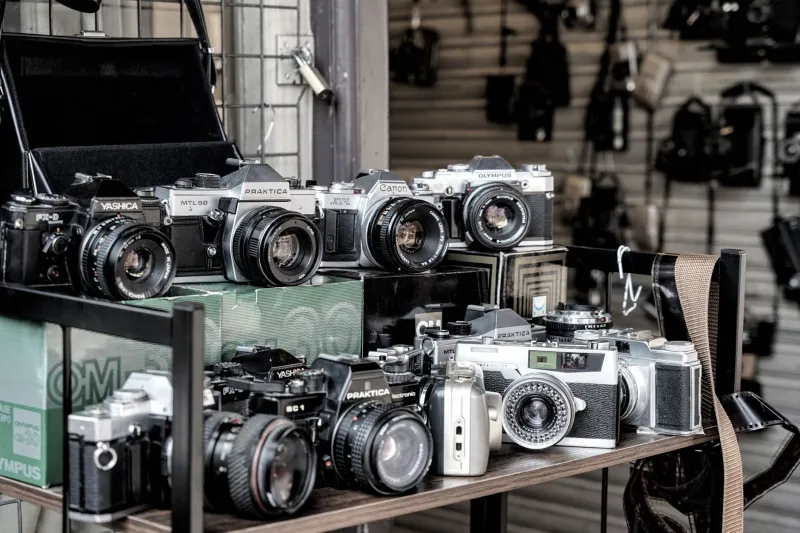
Let's be honest: there's something deeply satisfying about owning your gear. It's yours. It's ready when you are. You don't have to worry about returning it by noon on Sunday or paying an extra day's rental because your shoot ran long. That feeling of ownership is real — and for plenty of photographers, it makes complete sense.
But feelings aren't spreadsheets. And when you're trying to turn photography into a genuine income stream, the financial reality of gear ownership versus gear rental is a lot more complicated than it looks at first glance.
We dug into the numbers — and talked to several MyFotoRoom community members who've navigated this decision firsthand — to help you figure out which approach actually makes sense for where you are right now.
The Ownership Illusion
Most photographers default toward buying. It feels like the professional move. Renting, by contrast, can feel like admitting you're not serious enough to commit. But that framing gets the economics exactly backwards.
Consider a 70-200mm f/2.8 lens — a workhorse for weddings, events, and portrait work. A new copy from a major manufacturer will run you somewhere between $2,200 and $2,800, depending on the brand. That's real money. Now ask yourself: how many paid shoots will you do in the next twelve months that actually require that lens?
If the answer is four or fewer, you're almost certainly better off renting. A typical rental for that lens runs $45–$75 per day through services like BorrowLenses or LensRentals. Four shoots at $60 per rental is $240. Compare that to $2,500 upfront — plus the opportunity cost of having that capital tied up in a piece of glass rather than in marketing, education, or literally anything else that might grow your business.
When Ownership Actually Wins
Renting isn't always the right call. The math flips once you cross a certain usage threshold, and it flips hard.
Take Marcus, a commercial and real estate photographer based in Austin who's been part of the MyFotoRoom community for about three years. He shoots roughly 15–20 paid real estate sessions per month, and wide-angle lenses are non-negotiable for his work. "I did the rental math early on," he told us. "I was renting a 16-35mm almost every single week. After about four months, I realized I'd basically paid for the lens already and didn't own anything. Bought it, and the ROI was immediate."
The general rule of thumb: if you're using a piece of gear more than once or twice a month consistently, ownership starts to make financial sense — especially for core equipment you rely on for your primary niche. The break-even point on most lenses, when you compare rental costs to purchase price, typically falls somewhere between 30 and 50 rental days. Past that point, you're leaving money on the table by continuing to rent.
The Hidden Costs Nobody Mentions
Both sides of this equation have costs that don't show up in the headline numbers.
For ownership: Depreciation is real. Camera bodies especially lose value fast — sometimes 20–30% in the first year alone. There's also insurance (gear insurance typically runs 1.5–2% of replacement value annually), maintenance, and the psychological weight of having expensive equipment sitting idle between shoots. And if something breaks? Repair costs can be brutal, particularly on mirrorless bodies with complex electronics.
For renting: Logistics take time, and time has value. Coordinating a rental pickup or delivery, inspecting gear before a shoot, returning it on time — that administrative overhead adds up, especially if you're renting frequently. There's also availability risk: the specific lens you need for a Saturday wedding might already be booked by Wednesday afternoon, leaving you scrambling.
Jenna, a portrait and family photographer in the Chicago suburbs, learned that lesson the hard way. "I was renting a 85mm prime for every portrait session because I didn't want to commit to buying it. Then one week I couldn't get it — someone else had it booked for a whole weekend. I had to shoot with my kit lens and honestly, the client never knew the difference, but I knew. That's when I decided to just buy it."
Building a Smarter Hybrid Strategy
The photographers who seem to navigate this most effectively aren't firmly in either camp — they've built a deliberate hybrid approach. Here's how that tends to look in practice:
Own your everyday essentials. Whatever gear you use on 80% of your shoots should be yours. This is your core kit — the stuff you'd be lost without. Spreading rental costs across your most-used equipment is a slow financial drain.
Rent for specialty work. Macro lenses, tilt-shift lenses, high-end cinema glass, specialty lighting rigs — gear that serves a specific project or niche you visit occasionally is almost always better rented. You get access to professional-grade tools without the long-term financial commitment.
Use rentals to test before buying. This is genuinely one of the smartest uses of the rental ecosystem. Before dropping $1,800 on a prime lens, rent it for a weekend. Shoot with it in real conditions on a real project. You'll know within two sessions whether it belongs in your bag permanently.
Factor rental costs into your project quotes. If a client needs aerial drone footage and you don't own a drone, rent one — and build that cost directly into your project estimate. You're not eating the rental fee; the client is, as part of the cost of delivering their vision. This is standard practice in commercial photography and video production.
The Bottom Line
There's no universal right answer here, which is probably not what you wanted to hear. But the photographers in our community who've made the clearest progress toward sustainable income are the ones who treat gear as a business decision rather than an identity statement.
The question isn't "do serious photographers own their gear?" The question is: does owning this specific piece of gear, right now, at this stage of my business, make financial sense?
Run the numbers. Be honest about how often you'll actually use it. And don't let the romance of ownership talk you into a purchase your cash flow isn't ready to support. Your portfolio grows from the images you make — not the gear sitting on your shelf.