The Fotoroom Effect: Why Photographers Say a Dedicated Space Changed Everything
A Room of One's Own (With Better Lighting)
There's something almost magical about having a space that's entirely yours. Not the kitchen table where you edit between dinner prep and homework help. Not the living room couch where your laptop competes with Netflix. A real, dedicated space — walls, gear, and all — where the only agenda is making great photographs.
For a growing number of American photographers, that space is becoming a reality. Whether it's a converted spare bedroom in a Phoenix suburb, a cleaned-out garage in rural Tennessee, or a walk-in closet turned editing nook in a Brooklyn apartment, the "home fotoroom" movement is quietly reshaping how hobbyists and working photographers approach their art.
We reached out to members of the MyFotoRoom community to find out what happened when they finally stopped working around their photography and started building their lives around it.
From Cluttered Corner to Creative Hub
Tamara Wills, a portrait photographer based outside of Columbus, Ohio, spent three years shooting on weekends and editing at the dining room table. Her gear lived in a rolling cart that got shoved into the hallway whenever company came over. "I was always in someone's way, or someone was in mine," she laughs. "My husband would walk through the background of my editing sessions. The dog knocked over a softbox twice."
When her youngest left for college, Tamara claimed the empty bedroom. She painted the walls a deep charcoal gray, installed a basic three-point lighting setup using affordable LED panels from Amazon, and mounted a pegboard wall to organize her lenses, triggers, and accessories. Total investment? Just under $600.
"The first week I had that room, I shot more than I had in the previous two months combined," she says. "It wasn't even about having better equipment. It was about having permission — like the space itself told me this was serious."
That sense of psychological permission keeps coming up in conversations with photographers who've made the leap. The dedicated space signals intentionality. It says: this is what I do.
The Garage Studio: An American Classic
If the spare bedroom is the entry-level move, the garage conversion is the full commitment. Marcus Delray, a commercial product photographer in Austin, Texas, spent about $2,200 over six months transforming his two-car garage into a fully functional studio. He added insulation, painted the floor with epoxy coating, hung blackout curtains on a ceiling track system, and built a simple seamless backdrop rig using PVC pipe and a roll of white paper.
"I used to rent studio time at around $75 an hour," Marcus explains. "Within four months, the garage paid for itself."
He now shoots product work for local small businesses and e-commerce brands, and he shares behind-the-scenes shots of his setup regularly on MyFotoRoom, where his studio tour post became one of the most saved in the Community Spotlight feed last spring. "People always want to know how I built the lighting grid. I just used conduit pipe and some basic hardware store clips. Nothing fancy."
For photographers considering the garage route, Marcus's top advice is simple: deal with the temperature first. "A space heater and a window AC unit will cost you less than $300 total, and they're the difference between using the studio year-round or just in spring and fall."
Even Small Spaces Count
Not everyone has a spare room or a garage to claim, and that's okay. Some of the most creative home setups in the MyFotoRoom community exist in surprisingly tight quarters.
Jessica Tran, a food and lifestyle photographer in San Francisco, converted a deep walk-in closet into what she calls her "edit cave." A wall-mounted monitor, a compact desk, blackout fabric on the shelves to reduce light bounce, and a color-calibrated screen setup that would make plenty of full studios jealous. "I do all my editing in there. It's maybe 40 square feet, but it's mine," she says. "I close the door, put on a playlist, and I'm in the zone."
Jessica's closet studio cost her less than $400 to set up, and she credits it with helping her go from posting sporadically to maintaining a consistent weekly upload schedule on her MyFotoRoom profile. "When you have a dedicated space, you stop waiting for the right moment to create. The space creates the moment for you."
Practical Tips for Building Your Own Fotoroom
Ready to carve out your own creative corner? Here's what our community members swear by:
Start with lighting, not gear. A basic two- or three-light LED setup with adjustable color temperature will take you further than almost any camera upgrade. Look for budget-friendly kits in the $150–$300 range to start.
Control your walls. Neutral gray or white walls are endlessly versatile for both shooting and editing. Dark walls reduce light bounce for a more controlled environment; lighter walls can double as a reflective surface.
Get your storage right. Pegboards, wall-mounted shelving, and clear stackable bins are your best friends. When your gear is organized and visible, you're more likely to actually use it.
Calibrate your monitor. If you're editing in your new space, invest in a monitor calibration tool (around $100–$150). Consistent color accuracy means your images look right everywhere, not just on your screen.
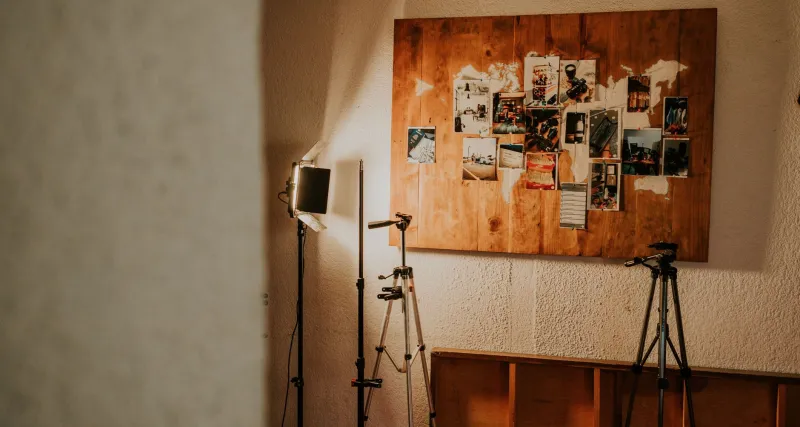
Make it yours. Hang prints. Put up a mood board. Add a plant. The more the space reflects your aesthetic, the more you'll want to spend time in it.
The Confidence Factor
Beyond the practical benefits, there's a recurring theme in these stories that's harder to quantify but maybe more important: confidence. Having a dedicated creative space seems to shift how photographers see themselves.
"I used to say I was 'into photography," says Tamara. "Now I say I'm a photographer. That room did that."
It's a distinction that resonates deeply with what MyFotoRoom is all about — creating space (literally and figuratively) for photographers to take their work seriously, share it with a community that gets it, and keep growing. Whether your fotoroom is a converted garage or a closet with a good monitor, the principle is the same: when you build a space for your art, your art has room to breathe.
Got a home studio setup you're proud of? Share it in the Community Spotlight — we want to see where the magic happens.