Someone Left You Their Camera. Now What?
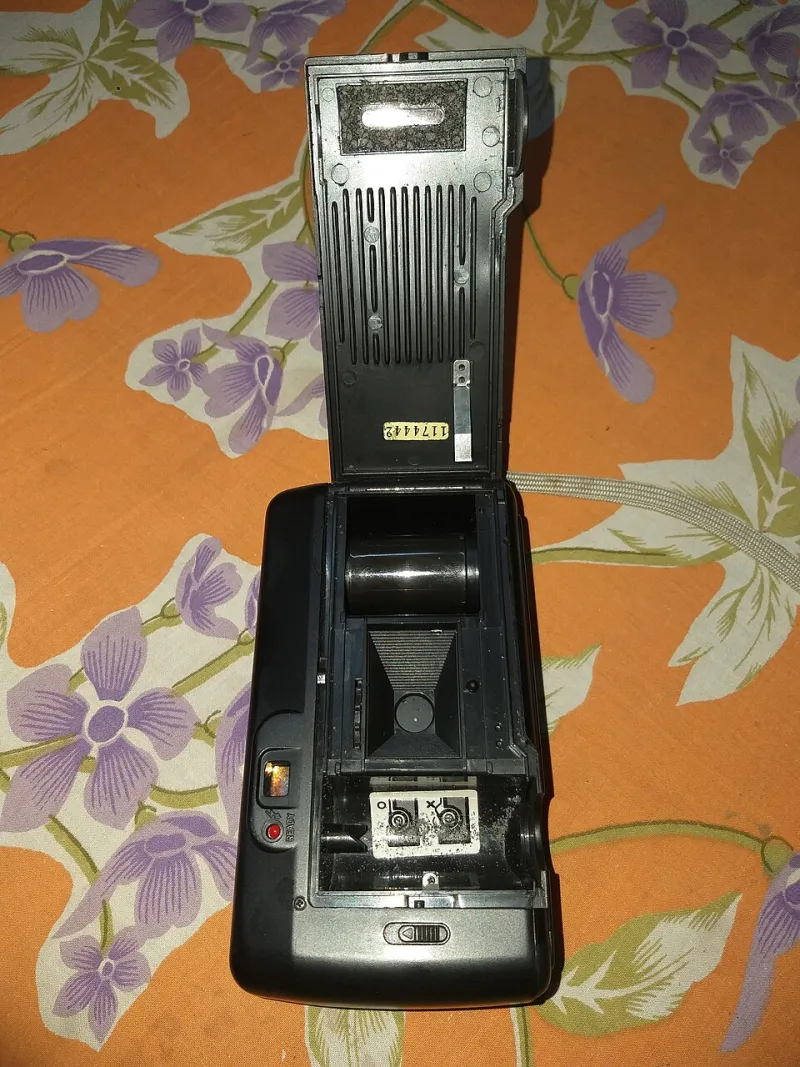
Photo: Billjones94, CC0, via Wikimedia Commons
It usually arrives in a cardboard box, or maybe a dusty camera bag that still smells like the person who carried it. A camera — sometimes several — passed down from a grandparent, a parent, an aunt who traveled the world in the '70s. Along with it comes a tangle of feelings: grief, curiosity, a vague sense of obligation, and maybe a little intimidation if the gear is nothing like what you're used to.
For a growing number of photographers, inherited equipment has become something more than a sentimental keepsake. It's become a creative catalyst.
The Weight of Someone Else's Camera
Lena Ostrowski was 26 when her grandfather passed away and left her his entire photography kit — a 1971 Pentax Spotmatic, three lenses, a light meter, and about 40 rolls of expired Kodak film. Lena had been shooting digitally for years. She'd never loaded a film camera in her life.
"I almost donated all of it," she admits. "I didn't know where to start, and every time I picked it up I just felt sad. It sat in my closet for almost a year."
What eventually pulled her in was a single photograph she found tucked inside the camera bag — a print her grandfather had made of her grandmother standing in a garden, shot on the very same Pentax. "The quality of the light in that image," Lena says, "I wanted to understand how he made that."
That question — how did they make that? — is one of the most powerful creative prompts in photography. And it's one that inherited gear has a unique ability to trigger.
Start With What You Have, Not What You Know
The first practical challenge with inherited gear is usually figuring out what you actually have. Older film cameras, medium format bodies, rangefinders, even early digital cameras from the early 2000s — these all require different knowledge bases and, in some cases, different film stocks or adapters.
Here's a simple triage process that works for most inherited collections:
Identify before you shoot. Write down every model number you find. A quick search on sites like Camera Wiki or the r/AnalogCommunity subreddit will tell you what you're working with, whether it's functional, and what film or batteries it requires. Don't skip this step — loading the wrong film size or using a dead battery in a camera that needs one for the meter can lead to wasted rolls.
Get it checked. Camera repair technicians — often called CLAs, for Clean, Lubricate, and Adjust — are available in most major US cities and through mail-in services online. For cameras with sentimental value, a CLA is worth every penny. It ensures the shutter is accurate, the seals aren't leaking light, and the mechanics are safe to use.
Source film thoughtfully. If the camera takes 35mm, you're in luck — it's widely available everywhere from B&H to your local drugstore. Medium format (120 film) is trickier but accessible through specialty retailers. Anything rarer than that may require some research, but the film photography community is remarkably generous with information.
Learning to See Through Someone Else's Lens
There's a particular kind of intimacy that comes from using a camera someone else used for decades. The wear patterns on the grip. The way the shutter sounds. The specific focal length they favored — which, once you start shooting with it, starts to feel like a handed-down perspective.
Jameel Patterson inherited his mother's Canon AE-1 Program after she passed in 2019. His mother had been an avid amateur photographer throughout the '80s and '90s, and the camera still had a half-finished roll of film inside it when Jameel received it.
"I had the roll developed before I ever shot a frame myself," he says. "There were pictures of me as a kid I'd never seen. Birthday parties, neighborhood stuff, ordinary Tuesday afternoons. I sat with those prints for a long time."
When Jameel finally started shooting with the AE-1, he found himself drawn to the same kinds of subjects — everyday domestic moments, nothing staged, nothing precious. "I think the camera taught me what my mom saw," he says. "And then I started figuring out what I see."
That process — absorbing a previous owner's visual vocabulary before developing your own — is something several photographers in the MyFotoRoom community have described. It's not imitation. It's conversation across time.
Honoring the Legacy Without Being Trapped by It
One of the more emotionally complex parts of shooting with inherited gear is the question of ownership. Whose work is it, really? If you're using your grandfather's camera and his favorite lens, shooting the kinds of subjects he loved, are you making your own photographs?
The answer, pretty clearly, is yes — but it takes some intentional mental work to get there.
Think of inherited gear the way a musician thinks about playing their teacher's instrument. The instrument carries history. It may even carry a particular sound. But what you play on it is entirely yours. The camera is a tool, and tools don't make creative decisions — you do.
A few ways to find that balance:
Shoot the familiar first, then branch out. Start by photographing subjects or places the previous owner would have recognized. It's a form of tribute and a way to calibrate the gear. Then gradually introduce your own subjects, your own light, your own framing choices.
Document the transition. Some photographers keep a dedicated project — a series of images made with inherited gear — as a way of marking the handoff. It creates a record of both the legacy and the new direction.
Don't force it. If a particular camera genuinely doesn't fit how you see, it's okay to display it rather than shoot with it. Not every piece of inherited gear needs to be pressed into active service. The act of preserving it is itself a form of respect.
The Unexpected Gift
Lena Ostrowski eventually burned through those 40 rolls of expired film her grandfather left her. The images were unpredictable — some perfectly exposed, some with the color shifts and grain that come from degraded emulsion. She loved them.
"Shooting with his camera slowed me down in a way nothing else had," she says. "Digital photography is so fast. This made me think before every frame. I think that's the real thing he left me."
That slowness — that deliberateness — is one of the most consistent things photographers report when they start working with older, inherited gear. In a photography culture that often rewards volume and speed, there's something quietly radical about a camera that asks you to stop and think.
If someone left you their camera, that might be exactly the invitation they intended.