Ditch the Alarm Clock: The Case for Shooting in Harsh Midday Light
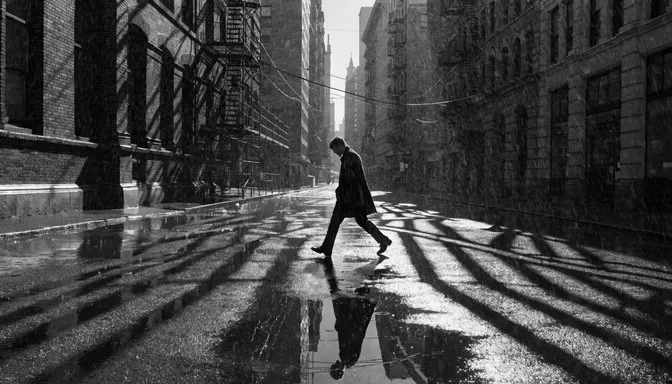
Photo: harsh midday sunlight urban street photography shadows, via images.stockcake.com
Every photography tutorial on the internet seems to agree on one thing: wake up before sunrise, drag yourself to a scenic overlook, and wait. The golden hour — that soft, honeyed window right after dawn or just before dusk — has been crowned the undisputed king of photographic light. And honestly? It's earned the reputation. The warmth is real. The drama is real.
But here's the thing nobody's saying loud enough: some of the most striking images being made right now are happening at noon, when the sun is punishing and the shadows are almost nonexistent. And the photographers making them? They're not making a mistake. They're making a choice.
Why Golden Hour Became Gospel
The golden hour myth didn't come from nowhere. Soft, directional light is genuinely forgiving — it flatters faces, adds depth to landscapes, and wraps everything in a cinematic warmth that feels almost universally pleasing. For decades, photography education reinforced this, and social media amplified it. When the most-liked images on any platform share a similar tonal quality, it creates a feedback loop. Shoot at golden hour, get validated. Repeat.
But validation and originality are two different things. Photographer Marcus Webb, based out of Chicago, noticed this tension a few years back when scrolling through his own portfolio. "Everything looked beautiful and everything looked the same," he says. "I was technically doing everything right, and my work was completely forgettable."
Marcus started forcing himself to shoot during his lunch break — not as an experiment, but out of sheer scheduling necessity. What he found surprised him. The flat, overhead light he'd been trained to avoid was doing something interesting: it was stripping away the atmospheric romance and leaving behind something rawer. More honest.
The Physics of Harsh Light (And Why It Works)
At midday, the sun sits high and the light falls almost straight down. Shadows get short and punchy. Colors become saturated rather than warm. Skin tones go cool. Architectural details get flattened in some places and hyper-defined in others.
All of that sounds like a problem. It's actually a toolkit.
Short shadows under the eyes and nose — what portrait photographers call "raccoon eyes" — can be redirected with a simple reflector bouncing light back up from below. In street photography, those same harsh shadows become graphic design elements, creating bold contrast lines across sidewalks and building faces. In product photography, the even overhead light can actually eliminate unwanted directional glare.
Sarah Nkemdirim, a freelance commercial photographer working out of Atlanta, has made midday shooting her calling card. "My clients kept asking me why my product shots looked different from everyone else's," she says. "I had to explain that I was shooting between 11 and 2. They thought I was joking."
Sarah uses a combination of diffusion panels and strategic positioning — shooting in covered walkways, under awnings, or using buildings to create secondary bounce sources — to control the quality of light without changing when she shoots. The result is a clean, contemporary look that reads as modern rather than nostalgic.
The Street Photographer's Secret
If there's one genre that's quietly embraced harsh light, it's street photography. In cities like New York, LA, and Houston, the visual complexity of midday — the crowds, the hard shadows cutting across storefronts, the way light bounces unpredictably off glass towers — creates a kind of controlled chaos that golden hour simply can't replicate.
Derek Fontaine shoots exclusively in Midtown Manhattan during his lunch hour. His Instagram feed is a study in contrast: deep black shadows, blown-out patches of white sidewalk, figures caught mid-stride with their faces half-lit. It's jarring in the best possible way.
"Golden hour in Manhattan is gorgeous, but everyone shoots it," Derek says. "When I post a noon shot, people stop scrolling because they haven't seen light used that way. It creates a conversation."
That conversation is exactly what platforms like MyFotoRoom are built for — images that make you stop, look twice, and want to know how they were made.
Practical Ways to Start Shooting at Noon
If you want to experiment with midday light without completely abandoning your golden-hour instincts, here are a few entry points:
Seek out architecture. Buildings, bridges, and urban infrastructure respond beautifully to overhead light. The shadows they cast become compositional tools. Start by photographing structures you've shot before at golden hour and compare the results — you might be surprised which version feels more alive.
Use shade as a studio. Find a spot that's shaded from direct overhead sun but still open to reflected light from surrounding surfaces. You'll get soft, even illumination with a cooler color temperature — great for portraits without the raccoon-eye problem.
Lean into color, not warmth. Midday light renders colors more accurately than golden hour does. If you're shooting anything where color fidelity matters — clothing, food, products — noon might actually be your most technically honest option.
Shoot upward. Looking up into trees, buildings, or open sky at midday creates light patterns that feel completely unlike anything you'd capture at dawn or dusk. The geometry gets strange and interesting fast.
Reframing What "Good Light" Actually Means
The deeper point here isn't really about noon versus 6 a.m. It's about breaking the reflex to defer to conventional wisdom without questioning it. Photography is full of rules that were written for a specific context and then got treated as universal law.
Good light is the light that serves the story you're trying to tell. Sometimes that's the warm, golden wrap of late afternoon. Sometimes it's the brutal overhead glare of a July afternoon in Phoenix that makes a portrait feel exposed and emotionally raw in a way nothing else could.
Marcus Webb puts it simply: "The best light is the light you actually understand how to use. And you only understand it by shooting in it."
So maybe sleep in this weekend. The noon light will be waiting.