Stop Blaming Your Camera: The Creative Shift That Actually Makes You a Better Photographer
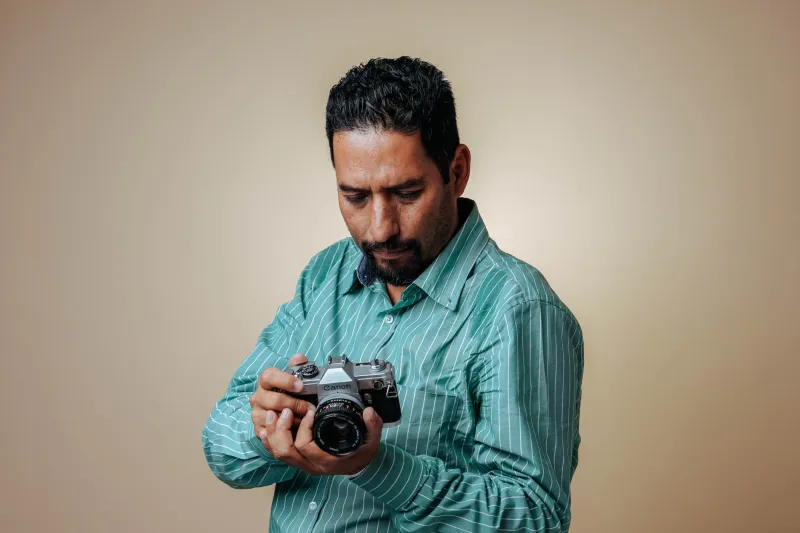
There's a moment almost every photographer knows. You're scrolling through someone else's stunning portfolio, jaw slightly dropped, and instead of asking how did they see that moment, your brain jumps straight to what camera did they use? It's almost reflexive. And honestly? It makes sense. Gear is tangible. You can buy it, unbox it, hold it in your hands. Creative vision is a lot harder to Amazon Prime to your doorstep.
But here at MyFotoRoom, we see thousands of images uploaded every week from photographers at every level — and the pattern is pretty clear. The photos that stop people mid-scroll rarely come from the folks with the newest bodies or the most expensive glass. They come from photographers who've learned to see before they ever lift the camera.
So let's talk about the gear trap, why so many of us fall into it, and what actually moves the needle.
The Upgrade Cycle Nobody Talks About Honestly
Camera manufacturers are really, really good at marketing. Every 18 months or so, a new body drops with a slightly better sensor, a few extra autofocus points, and just enough incremental improvements to make your current setup feel suddenly inadequate. The photography forums light up. YouTube reviews flood your recommendations. And before long, you're convincing yourself that the reason your shots aren't where you want them to be is that you're one firmware update away from greatness.
Marcus T., a wedding and portrait photographer based out of Nashville who's been shooting professionally for over a decade, has a name for this cycle. He calls it "gear therapy."
"When I was starting out, I upgraded my body three times in two years," he said. "Every single time, I thought this was going to be the thing that unlocked something. And every single time, I shot the same mediocre stuff I was shooting before — just with better specs on the file."
The uncomfortable truth Marcus eventually confronted was that his images weren't limited by his equipment. They were limited by his understanding of light, his compositional instincts, and his ability to connect with subjects. None of those things come in a box.
Budget Gear, Stunning Results — It's Not as Rare as You Think
If you want proof that vision beats specs, you don't have to look far. Some of the most talked-about images in the MyFotoRoom community this past year were shot on gear that would barely register on a spec sheet comparison.
Tamara R., a documentary-style family photographer from Austin, Texas, built her entire client base shooting on a used crop-sensor body she picked up for under $400. Her images — warm, candid, emotionally layered — consistently rack up more engagement in the community than technically sharper work from photographers with full-frame setups that cost ten times as much.
"People kept telling me I needed to upgrade to be taken seriously," Tamara shared. "But my clients weren't hiring me for my sensor size. They were hiring me because of how I made them feel during a session and how I captured real moments. The camera is just the tool I use to do that."
This isn't to say gear is completely irrelevant — it isn't, and we'll get to that. But Tamara's story is common. The photographers who grow fastest aren't necessarily the ones spending the most. They're the ones shooting the most, reflecting the most, and actively working on the fundamentals.
So What Actually Matters?
Here's a more useful question than "should I upgrade my camera?": What is actually limiting my photography right now?
Be honest with yourself. Is it really dynamic range? Or is it that you're still not confident reading natural light? Is it autofocus speed? Or is it that you're not anticipating moments before they happen?
The investments that tend to pay off for most photographers fall into a few categories:
A decent lens over a fancy body. If you're going to spend money on gear, glass is almost always the smarter move. A quality 50mm or 35mm prime lens will teach you more about composition and light than a sensor upgrade ever will — and the images will show it.
Education and intentional practice. A workshop, an online course, or even just a committed commitment to shooting one subject deeply for 30 days will return more on your investment than a new body. Seriously. Track your growth over the last year and ask yourself how much of it came from gear versus deliberate practice.
Feedback and community. This one's free, and it might be the most powerful tool available to you. Posting your work somewhere like MyFotoRoom and genuinely engaging with the critiques you receive accelerates growth in a way that solo shooting just can't replicate. Other eyes see what yours miss.
The Honest Gear Audit
Here's a challenge worth sitting with: pull up your last 20 favorite shots you've taken. Now ask yourself — would a different camera have made any of them meaningfully better? Not technically sharper in a side-by-side pixel peep. But better in the way that matters, the way that makes someone feel something?
For most photographers, the answer is no. The limiting factor in those images was a decision made before the shutter was pressed — where to stand, when to wait, how to work the light, what story to tell.
Now ask yourself how much you've spent on gear in the past 12 months versus how much time you've spent studying photographers you admire, practicing specific techniques, or actively seeking critique on your work. That ratio is pretty telling.
The Mindset That Actually Changes Things
The photographers who consistently produce work that resonates — whether they're shooting on a flagship mirrorless or a three-year-old entry-level DSLR — share a common trait. They treat every shoot as a learning opportunity, not a performance. They're curious about light, obsessed with storytelling, and more interested in getting better than in looking like they already are.
That mindset is available to every single person reading this, right now, with whatever gear is already sitting in your bag.
Your camera is not holding you back. And the sooner you really believe that, the faster your photography will actually grow.
So next time you feel that familiar itch to browse the latest camera releases, try this instead: go out and shoot with what you have. Post it here. See what the community says. Iterate. That loop — create, share, reflect, improve — is the real upgrade. And it doesn't cost a thing.